


Heat Detection for spring calving herds: Maximising breeding success
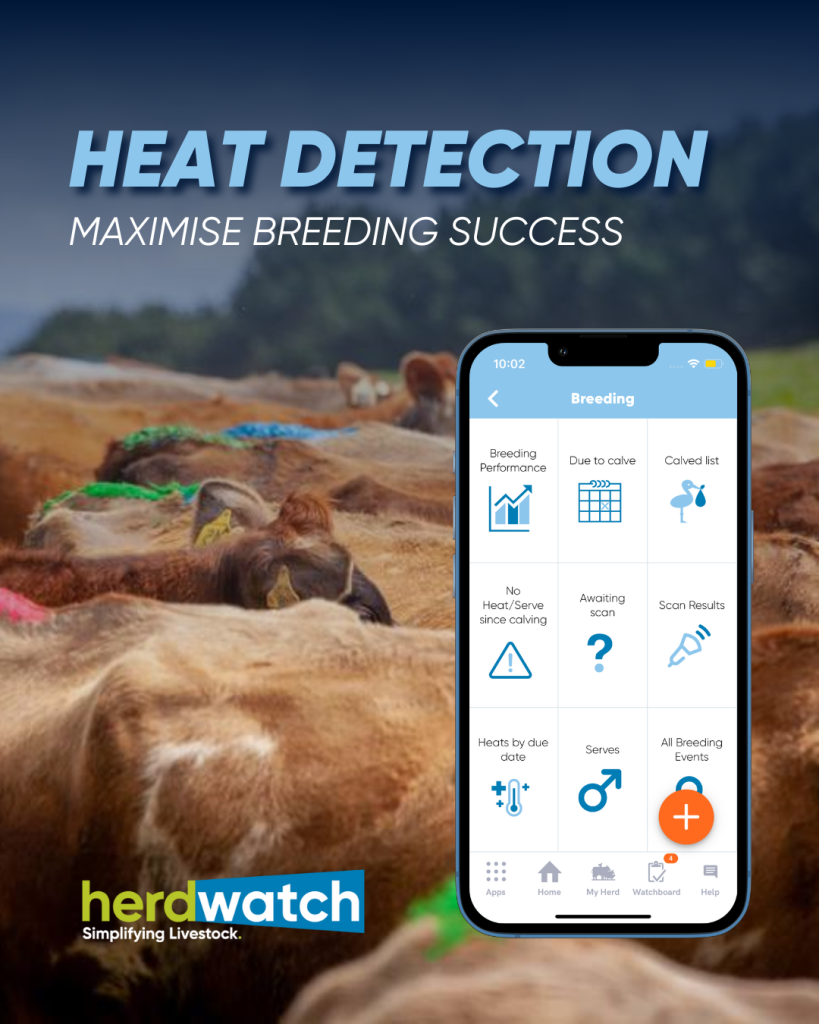
As spring approaches, dairy and beef farmers with spring calving herds face one of the most critical periods in their farming calendar – the breeding season. Effective heat detection is fundamental to maintaining a compact calving pattern, optimising fertility, and ensuring the profitability of your herd.
This guide explores the essentials of heat detection and how to implement a successful strategy on your farm.
Why heat detection matters for spring calving herds
For spring calving systems, achieving a tight calving pattern directly impacts farm profitability. A missed heat can extend your calving interval by 21 days, leading to:
- Later calving cows that produce less milk in their lifetime
- Reduced days at grass for the cow and her offspring
- Extended breeding and calving seasons requiring more labour
- Increased culling rates due to fertility issues
- Lower overall farm profitability
Research shows that each missed heat cycle costs approximately £250 per cow when accounting for lost production and extended calving intervals.
Signs of heat to watch for
Successful heat detection relies on recognising both primary and secondary signs of oestrus:
Primary signs
- Standing to be mounted by other cows
- Mounting other cows
Secondary signs
- Restlessness and increased activity
- Clear mucus discharge from vulva
- Swollen, red vulva
- Sniffing and chin resting on other cows
- Roughened tail head with mud marks on flanks
- Decreased milk production
- Bellowing and increased vocalization
- Decreased feed intake
Heat detection practices
Dedicated Observation Periods
Allocate specific times for heat detection, ideally:
- Early morning (5-7 AM)
- Midday (12-1 PM)
- Evening (7-9 PM)
Cows show the most heat activity when they’re not occupied with feeding or milking. Each observation period should last at least 20 minutes.
Environment matters
- Provide adequate space for cow interaction
- Ensure good footing (cows avoid mounting on slippery surfaces)
- Create dedicated areas where cows can comfortably express heat behaviour
- Consider grouping cows by breeding status when feasible
Record keeping
Maintain detailed records of:
- Previous heats
- Expected heat dates
- Breeding dates
- Any abnormal cycles or behaviours
This information helps predict future heats and identify potential fertility issues early.
Heat detection aids
Several tools can complement visual observation:
- Tail paint/chalk – Apply a strip of paint or chalk on the tailhead that gets rubbed off when the cow is mounted. This simple, cost-effective method requires daily checking and reapplication.
- Heat mount detectors – Plastic devices attached to the cow’s tailhead that change colour or appearance when pressure from mounting occurs. These provide clear visual indicators of mounting activity.
- Activity monitors – Pedometers or collar-based systems track increased movement associated with oestrus. Modern systems can detect subtle activity changes with 80-90% accuracy.
- Automated systems – collar sensors not only monitor activity but also rumination patterns and other behaviours, sending alerts to your phone when a cow likely enters heat.
- Teaser bulls or vasectomised bulls – These animals can help identify cows in heat through their natural detection abilities, though they require additional management.
How Herdwatch transforms heat detection management
The Herdwatch livestock management app provides powerful tools that streamline and enhance your heat detection process:
Heat recording and predictions
- Record observed heats directly in the field using your smartphone or tablet
- Automatic calculations of expected next heat dates based on the cow’s cycle
- Notifications when cows are due to come into heat
- Custom reports of cows expected to cycle within specific date ranges
Breeding records management
- Document breeding events with service sire details, technician information, and notes
- Track repeat services to identify potentially problematic cows
- Record both AI and natural service breeding
Timing is everything: When to inseminate
Once heat is detected, timing insemination correctly maximises conception rates:
- For cows observed in standing heat in the morning: breed that same afternoon
- For cows observed in standing heat in the afternoon/evening: breed the following morning
- The AM/PM rule generally aligns insemination with optimal fertility timing
Remember that the egg is viable for only 6-10 hours, while sperm can survive for 24-30 hours in the female reproductive tract.
Challenges and solutions
Silent heats
Some cows, particularly high producers, may not display obvious heat signs. For these animals:
- Use multiple detection methods simultaneously
- Check milk progesterone levels if available
- Consider timed AI protocols in consultation with your veterinarian
Heat detection in poor weather
Mounting activity decreases during extreme weather. During these periods:
- Increase observation frequency
- Rely more heavily on technology aids
- Consider moving observations to more protected areas
First heat after calving
The first heat post-calving is often shorter and shows subtler signs. Be particularly vigilant with fresh cows approaching their voluntary waiting period.
Building your heat detection strategy
A successful heat detection program combines:
- Trained observers who know what to look for
- Dedicated observation times built into the daily routine
- Appropriate aids that complement visual observation
- Comprehensive record-keeping systems like Herdwatch
- A comfortable environment that allows for natural behaviour
With a solid heat detection system in place, supported by efficient digital tools like Herdwatch, spring calving herds can achieve higher conception rates, maintain tight calving patterns, and ultimately improve farm profitability.