


Farm Smart: Beef and Dairy Farmer uses App to help improve Herd Performance
Leicestershire farmer Andy Webb manages 650 acres, 120 dairy cows, 400+ beef cattle, and a pedigree sheep flock across multiple sites — and uses Herdwatch to access every animal’s records from his phone, wherever he is on the farm.
Andy Webb farms a council holding at Usher Farm, near Gilmorton in Leicestershire, together with his parents. The holding itself is 64 acres. In addition, Andy rents land in different blocks nearby and contract farms other ground — running a total of 650 acres across several sites. With three separate sets of buildings spread around the parish, having instant access to records from his phone is not just a convenience — it is essential.
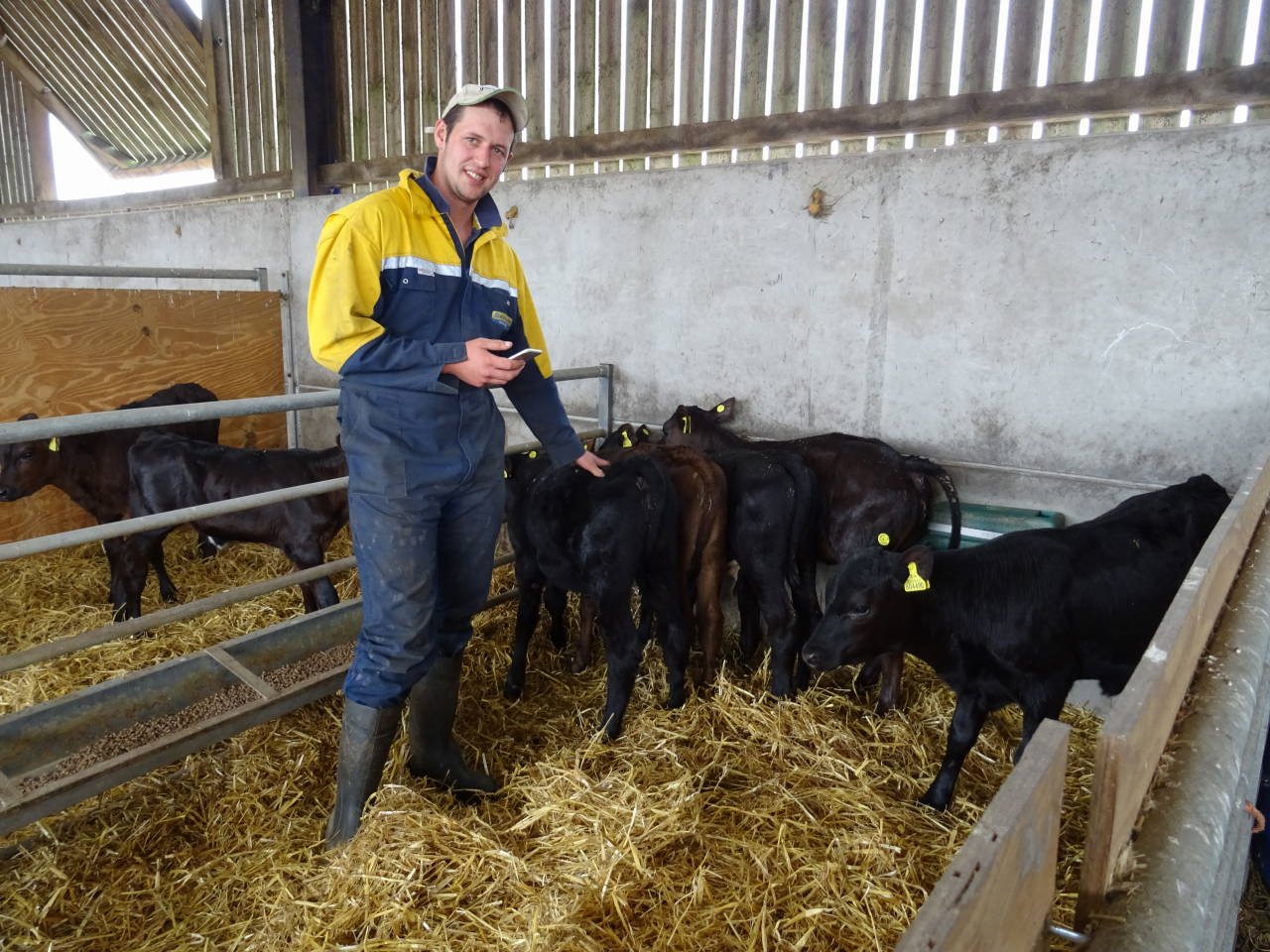
Records from three sites — all on one phone
Andy uses Herdwatch primarily within the beef units, where it links directly to BCMS — automatically updating records and transferring them to his phone. Animals are sorted into age groups and every record is accessible at the touch of a button. Consequently, there is no need to return to the office to check a record mid-job.
Furthermore, the system works offline. As Andy points out, the cloud-based approach means the app functions without an internet connection — important on a farm spread across multiple sites where signal is not always reliable.
Weight recording — 1.2kg per day or they move on
Getting herd performance right is central to how Andy manages his beef enterprise. As a result, fattening cattle are weighed every month. He targets a daily live weight gain of over 1.2kg per day. When an animal drops below that, it goes early. Those performing particularly well are moved to a higher group. The weight recording feature in Herdwatch makes identifying both straightforward.
Each of the 400+ animals on the farm has its own individual record in Herdwatch. Moreover, the time saved by having that information instantly available rather than searching through paperwork has been significant.
The dairy herd — sexed semen, Holstein Friesians, and a Tesco supply chain
The dairy herd is served mainly by Holstein Friesian bulls. Friesian bull calves go on a 12–14 month intensive indoor system. All heifers are reared as replacements. This year, Andy used sexed semen — and despite costing nearly twice the price, he felt it was well worthwhile. Specifically, 18 of 20 heifers were in calf at first service.
Belgian Blue and Limousin genetics are also used on the dairy cows. Those calves — heifers and steers — are grazed for 12 months before coming inside to finish. They go to a local butcher on an 18–24 month system depending on when they were born. Meanwhile, the Friesian bull calves are sold to wholesalers and most end up with Tesco, the buyer of Andy’s milk.
Andy uses Herdwatch across the full operation:
- BCMS integration — records automatically transferred to his phone
- Animal search — last three digits of ear tag gives instant full record
- Age group sorting — animals organised efficiently across multiple sites
- Monthly weight recording — daily gain tracked per animal, reports printable
- Performance management — underperformers identified and acted on early
- Individual animal records — every calf and lamb reared on farm has its own profile
- Offline capability — works without internet connection across all sites
You can read more real farmer stories on our farm case studies page.
650 acres. 400 cattle. All on one phone.
For Andy, Herdwatch ties together a complex, multi-site operation — giving him instant access to every animal’s records wherever he is on the farm, and the performance data he needs to make better decisions faster.
“It saves me so much time — and once you get used to it, it’s honestly very, very simple.”
Join Andy and over 22,000 farmers using Herdwatch to simplify farm records, track herd performance, and make better decisions every day.