


Calf Dehorning – Remain Ethical and Compliant
Dehorning calves is one of the most common calf management tasks on Irish farms, but it must be carried out correctly to remain compliant with Irish legislation and to protect animal welfare.
This guide covers everything you need to know about calf disbudding: when to do it, which methods to use, the legal requirements around anaesthesia, and how to record treatments using Herdwatch, your complete farm management software solution.
What is calf disbudding and why does it matter?
Disbudding and dehorning are related but distinct procedures. Disbudding involves removing horn buds from calves at an early stage of development, before the buds have attached to the skull.
Because the horn tissue is still superficial, disbudding causes less trauma and heals faster than dehorning older cattle, where the horn has fully developed and fused to the skull.
Carrying out the procedure early is better for the animal and simpler for the farmer. Horned cattle pose a risk of injury to other animals and handlers, and many farm assurance schemes, processors, and markets require polled or dehorned cattle.
When to dehorn calves
The optimal time for disbudding is within the first one to two weeks of the calf’s life, before the horn bud attaches to the frontal bone of the skull. The earlier the procedure is carried out, the less tissue is involved and the quicker the recovery.
Once horn growth progresses beyond this stage, the calf is considered a candidate for dehorning rather than disbudding. Dehorning older cattle is a more invasive procedure, carries a higher risk of complications, and is associated with greater pain and stress for the animal.
Legal requirements for dehorning calves in Ireland
In Ireland, calf disbudding and dehorning are governed by the Diseases of Animals Act (1966) and the Protection of Animals (Amendment) Act (1965). Farmers must be aware of the following legislative requirements:
- Local anaesthesia is required for disbudding any calf over two weeks old
- Local anaesthetic can only be obtained with a veterinary prescription
- The sale or export of horned animals is prohibited
- Failure to comply can result in significant penalties
Veterinary guidance strongly recommends using local anaesthesia for all disbudding procedures, regardless of the calf’s age. Commonly used products include adrenacaine for cattle and lidocaine, both available on veterinary prescription.
Disbudding calves: Anaesthetic requirements and administration
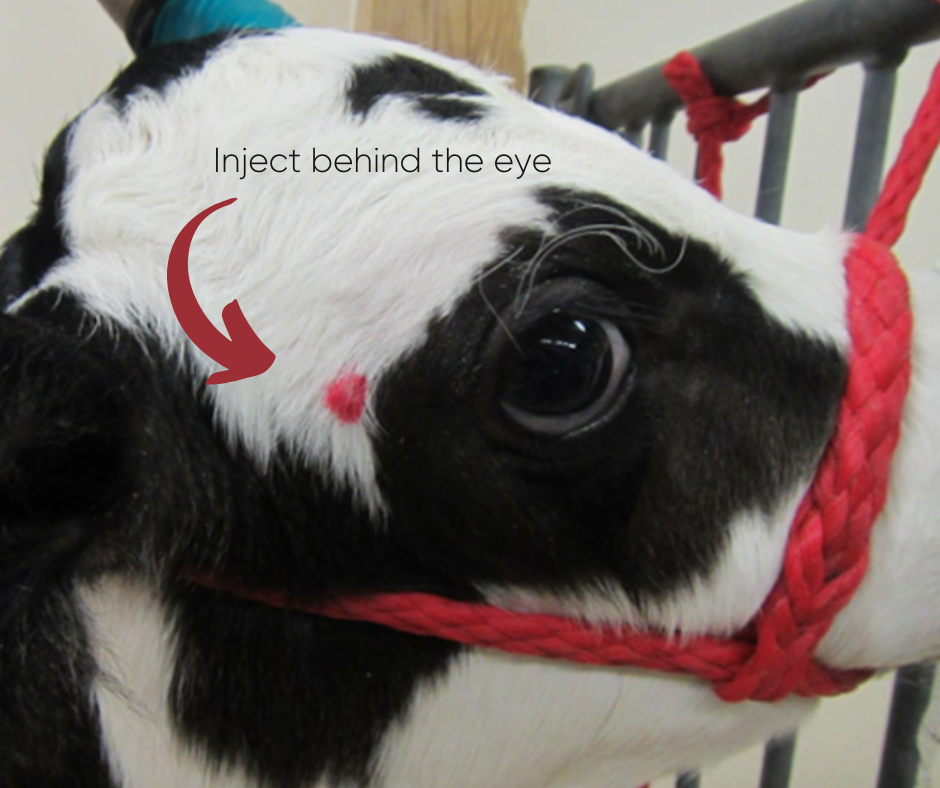
Local anaesthetic is administered to the corneal nerve, located just behind the eye of the calf. The injection blocks sensation to the horn bud area, allowing the procedure to be carried out with minimal pain and stress for the animal.
Allow sufficient time after administering the local anaesthetic before beginning the procedure. Signs that the anaesthetic has taken effect include a relaxed posture, slightly droopy ears or eyelids, and a general reduction in alertness.
Proceeding too quickly reduces the effectiveness of the block.
How to dehorn a calf step-by-step
The following method describes hot iron cauterisation, the most widely recommended technique for disbudding calves in the first one to two weeks of life.
- Prepare the calf dehorning crate
- Place the calf securely in a custom-built calf dehorning crush or crate
- A well-designed calf dehorning crate minimises movement, reduces stress for the animal, and protects the operator
- Administer local anaesthetic
- Inject the required dose of local anaesthetic to the corneal nerve on both sides
- Use adrenacaine or lidocaine as prescribed by your vet
- Wait for the anaesthetic to take effect
- Allow adequate time for the block to work fully before proceeding
- Check for signs of relaxation
- Heat the calf dehorner
- Use a cauterising calf dehorner or gas dehorner for calves.
- Ensure the iron is at the correct temperature before applying it to the bud
- An insufficiently heated iron will not remove the bud cleanly
- Remove the bud completely
- Apply the dehorning iron to the horn bud and rotate to ensure complete removal of all bud tissue
- If the bud is not fully removed, horn regrowth will occur
- Cauterise and treat
- After removing the bud, cauterise the wound to stop bleeding and apply a suitable antiseptic spray
- Record the treatment
- Record the procedure on Herdwatch immediately, including the anaesthetic used, dose, and date
Equipment for Calf Dehorning
Having the right equipment makes the process safer and more effective for both the animal and the operator:
- Calf dehorning crate or crush: A purpose-built calf dehorning crate or calf dehorning crush restrains the animal securely, reducing movement and stress.
- Electric or gas dehorner for calves: A quality electric or gas dehorner for calves delivers consistent heat for clean, complete bud removal. Ensure it is fully heated before use.
- Local anaesthetic: Adrenacaine for cattle or lidocaine (on veterinary prescription).
- Antiseptic spray: Applied post-procedure to reduce infection risk.
A note on dehorning paste
Dehorning paste (caustic paste) can be used in very young calves as an alternative to cauterisation. However, it carries a higher risk of spreading to surrounding tissue and to other animals if calves are housed together or if the dam licks the calf.
Cauterisation with a heated iron is generally considered the safer and more reliable method.
How to record calf dehorning on Herdwatch
Irish farmers are required to keep accurate treatment records for all veterinary medicines administered on farm, including local anaesthetics used during disbudding. Herdwatch makes it straightforward to record these treatments and generate reports for Department inspections.
To record a dehorning treatment on Herdwatch:
- Open the Herdwatch app.
- Select Cattle Treatment from the quick actions menu.
- Select your treatment from your medicine cabinet, or use the search bar.
- If the remedy is not listed, select Remedy not in list and search for Lidocaine or your prescribed anaesthetic.
- Enter the remedy details and select the calves from your herd list.
- Save the record.
Treatment records can be linked to remedy purchases from your vet and exported as reports for Department of Agriculture inspections.
Frequently asked questions
When should I dehorn calves?
Ideally within the first one to two weeks of life, before the horn bud attaches to the skull. The earlier the procedure, the less traumatic it is for the animal.
Do I need anaesthetic to disbud calves in Ireland?
Yes. Irish legislation requires the use of local anaesthesia for disbudding any calf over two weeks old. Veterinary guidance recommends its use for all calves regardless of age. Anaesthetics such as adrenacaine or lidocaine must be obtained on prescription from your vet.
Where do you inject calves for dehorning?
The local anaesthetic is injected into the corneal nerve, located just behind the eye of the calf. This blocks sensation to the horn bud area on each side.
What is the difference between disbudding and dehorning?
Disbudding removes the horn bud before it has attached to the skull, making it less invasive. Dehorning removes a developed horn in older cattle and is a more significant procedure. Disbudding is strongly preferred where possible.
Can I use dehorning paste on calves?
Dehorning paste can be used on very young calves but carries risks, particularly if calves are housed together or the dam licks the application site. Hot iron cauterisation is the more widely recommended method.
Stay compliant with Herdwatch
Join over 21,000 Irish farmers who use Herdwatch as a trusted cattle management software to manage farm records, treatment logs, and compliance reporting. Record calf dehorning treatments in seconds and generate reports for Department inspections at the touch of a button.
Start your 30-day free trial today.