


Protecting your flock: A guide to vaccinating lambs against clostridial diseases
Few things are as disheartening as finding a healthy-looking lamb dead in the field with no obvious cause. Clostridial diseases are responsible for a significant number of these sudden deaths in Irish flocks every year and in most cases, they are entirely preventable with a well-managed vaccination programme.
Understanding what these diseases are, when to vaccinate, and how to keep records of your sheep vaccination schedule are all key parts of responsible flock management.
Speak to our helpful team today to find out more about Herdwatch’s solutions.
What are clostridial diseases?
Clostridial diseases are caused by several species of Clostridium bacteria, which are widespread in the soil and in the digestive tracts of sheep. Under normal conditions these bacteria cause no harm.
But when circumstances allow them to multiply rapidly, often triggered by a change in feed, stress, or a wound, they produce powerful toxins that can kill quickly.
The most commonly encountered clostridial diseases in Irish sheep flocks include:
- Enterotoxaemia Type C (Haemorrhagic Enteritis): Affects young lambs in the first few weeks of life. Causes a severe, often fatal infection of the small intestine, sometimes associated with sudden dietary changes or stress.
- Enterotoxaemia Type D (Pulpy Kidney Disease): Typically strikes the biggest, fastest-growing lambs, particularly those on high concentrate diets or nursing from ewes with very high milk production. The lamb can appear perfectly healthy one day and be found dead the next.
- Tetanus (Lockjaw): Caused by Clostridium tetani entering through wounds. A particular risk following castration, tail docking, or any other procedure that breaks the skin. Causes progressive muscle stiffness and is often fatal if untreated.
- Lamb Dysentery: A cause of sudden death or scour in lambs under two weeks old, particularly in intensive lambing systems with high stocking density.
Vaccines such as Heptavac P, one of the most widely used products in Ireland, protect against the diseases above as well as Pasteurella pneumonia. Your vet can advise on which product is most appropriate for your system.
Sheep vaccination
Vaccination works in two ways in a sheep flock. When you vaccinate ewes before lambing, the antibodies she produces are transferred to her lambs through the colostrum in the first hours of life. This passive immunity protects lambs during their most vulnerable early weeks, before they are old enough to mount their own immune response.
Once lambs are old enough, they need their own active vaccination course to build lasting protection. This is particularly important as passive immunity from the dam begins to wane.
Lambs deprived of adequate colostrum will have little or no passive protection and may need earlier intervention. This is another reason why colostrum management at lambing is so closely linked to vaccination outcomes.
Recommended vaccination schedule
For in-lamb ewes:
- Ewes new to the programme: Administer a primary course of two doses, four to six weeks apart. The second dose should ideally be given four to six weeks before lambing so that antibody levels in the colostrum are at their peak.
- Ewes previously vaccinated: Give a single annual booster four to six weeks before lambing to maintain colostrum antibody levels.
For lambs:
- Lambs from vaccinated ewes: These lambs receive passive protection through the colostrum. Begin their own vaccination course at six to ten weeks of age with two doses, three to four weeks apart.
- Lambs from unvaccinated ewes or those that did not receive adequate colostrum: These lambs have little or no passive protection. A tetanus antitoxin can be given immediately after birth and before any procedures such as castration or tail docking. Start the vaccination course earlier than usual and discuss the specific timing with your vet.
Best practice for vaccine administration
The effectiveness of any vaccination programme depends not just on using the right product at the right time, but also on how vaccines are handled and administered.
- Storage: Vaccines must be stored at the correct temperature, typically 2 to 8 degrees Celsius. A vaccine that has been frozen or left in a hot vehicle may lose potency entirely
- Hygiene: Use a clean needle for each animal, or at minimum change needles regularly. Administer subcutaneously, typically in the neck, to minimise injection site reactions and avoid tissue damage in the carcase
- Timing: Allow sufficient time between the final dose and lambing. Rushing the schedule reduces the window for antibody build-up in the colostrum
- Withdrawal periods: Always check withdrawal periods, particularly for lambs going to slaughter. Keep a record of vaccination dates and products used for traceability purposes
Scour in lambs
Scour in lambs can be caused by a range of pathogens, including E. coli, rotavirus, cryptosporidium and salmonella.
Clostridial vaccination does not directly protect against all of these, but the connection between passive immunity, colostrum quality, and resistance to scour is well established.
Lambs that receive adequate colostrum from well-vaccinated ewes are better equipped to resist infectious disease in general during those critical first weeks.
In systems where scour is a recurring problem, it is worth discussing a more targeted vaccination programme with your vet, as there are vaccines available that specifically address the most common scour pathogens.
Using Herdwatch to stay on top of your vaccination programme
Keeping track of which animals have been vaccinated, when they are due their next dose, and which product was used is straightforward in a small flock but can quickly become difficult to manage as numbers grow, especially during the busy lambing period.
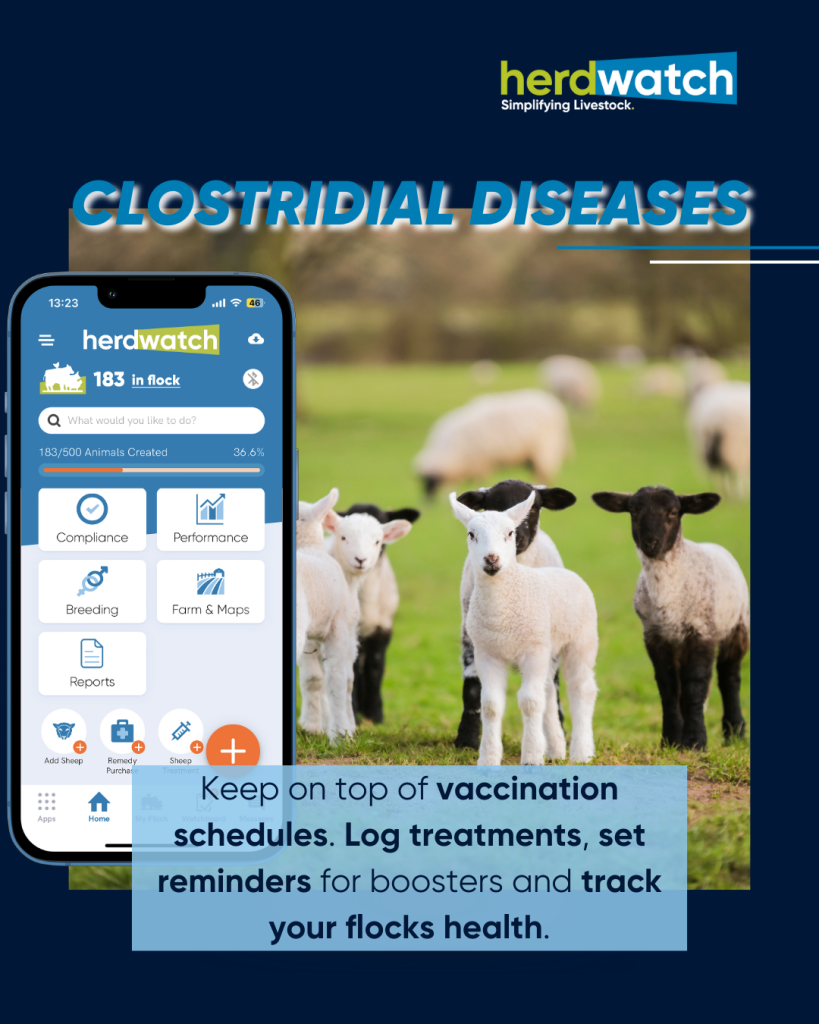
Herdwatch lets you log treatments and vaccinations against individual animals, set reminders for booster doses, and maintain a complete health history for your flock, all from your phone.
At inspection time, whether for Bord Bia quality assurance or a DAFM cross-compliance check, having those records at your fingertips means you are not scrambling to find paperwork.
Contact our friendly team today to find out more about our sheep management software.