


Blowfly Prevention in Sheep
Don’t get caught out by blowfly strike
Fly strike is one of the most serious welfare problems affecting the sheep industry in Great Britain, especially during periods of wet weather.
It’s caused by the invasion of live tissue by blowfly larvae, typically from species like the greenbottle fly (Lucilia sericata), Calliphora erythrocephala, Phormia terraenovae, and even Wohlfahrtia magnifica in some regions.
Female flies are attracted to soiled fleece, foot rot lesions, or open wounds, where they lay their eggs. Once hatched, maggots feed on the sheep’s tissue, releasing enzymes and toxins that can cause illness, rapid weight loss, and even death if left untreated.
The rising threat of blowfly strikes
Historically, blowfly populations have peaked in summer, but the Met Office has reported changing climate conditions (milder winters and warmer springs) which have extended the risk period. Fly abundance is now recorded from March to December in lowland areas, especially in southern parts of the UK.
Under ideal conditions, the lifecycle of Lucilia sericata (the most common initiator of blowfly strike) can be less than 10 days:
- Eggs hatch within 12 hours
- Maggots mature into larvae in just 3 days
- Mature larvae (maggots) fall to the ground, pupate, and re-emerge as flies within 3–7 days
- Some blowfly larvae overwinter in the soil and hatch in early spring
Signs of fly strike in sheep
Blowfly strikes can develop quickly, especially in warm, humid weather. Look out for:
- Isolation from the flock
- Agitation, kicking, or nibbling at the affected area
- Discoloured or moist-looking wool
- Disturbed grazing or appetite loss
- Visible maggots or decaying tissue
- Foul-smelling fleece
- Signs of toxaemia (blood poisoning)
- In severe cases, death
How to get rid of blowfly infestation
Blowfly control should be proactive. Here’s how to reduce risk:
1. Prophylactic treatment
Apply preventative treatments, such as dips, pour-ons, or sprays containing insect growth regulators (IGRs)—at the start of blowfly season. Product selection should be based on:
- Sheep age and breed
- Withdrawal periods
- Shearing and lambing timelines
More than one application may be needed over the season.
2. Fleece management
Reduce fleece soiling through:
- Dagging and crutching
- Timely shearing
- A strong worm control programme to reduce scouring
- Tail docking in certain lowland flocks
3. Lameness management
Foot rot lesions attract female blowflies. Prompt treatment is critical to prevent fly strike on the feet and reduce lameness.
4. Fly population control
- Control blowfly populations early in the year to reduce fly abundance later
- Use fly traps, which can reduce strikes by up to 80% per season
- Dispose of deadstock quickly and efficiently
- In high-risk periods, consider grazing sheep in exposed, windier pastures that are less favourable to flies
Record fly strike treatments with Herdwatch
Keeping treatment records is crucial for animal welfare and farm compliance. The Herdwatch app makes it easy to record every blowfly control treatment, whether it’s a one-off or a whole-flock prophylactic treatment using dips or CLiK.
How to record a treatment in Herdwatch:
- Tap the orange plus button
- Choose Sheep Treatment
- Select Treatment only / from Remedy Cabinet
- Pick your product and tap Next
- Enter the administration date
- Fill out the required details and tap Next
- Select treated animals (or Select All)
- Tap Save
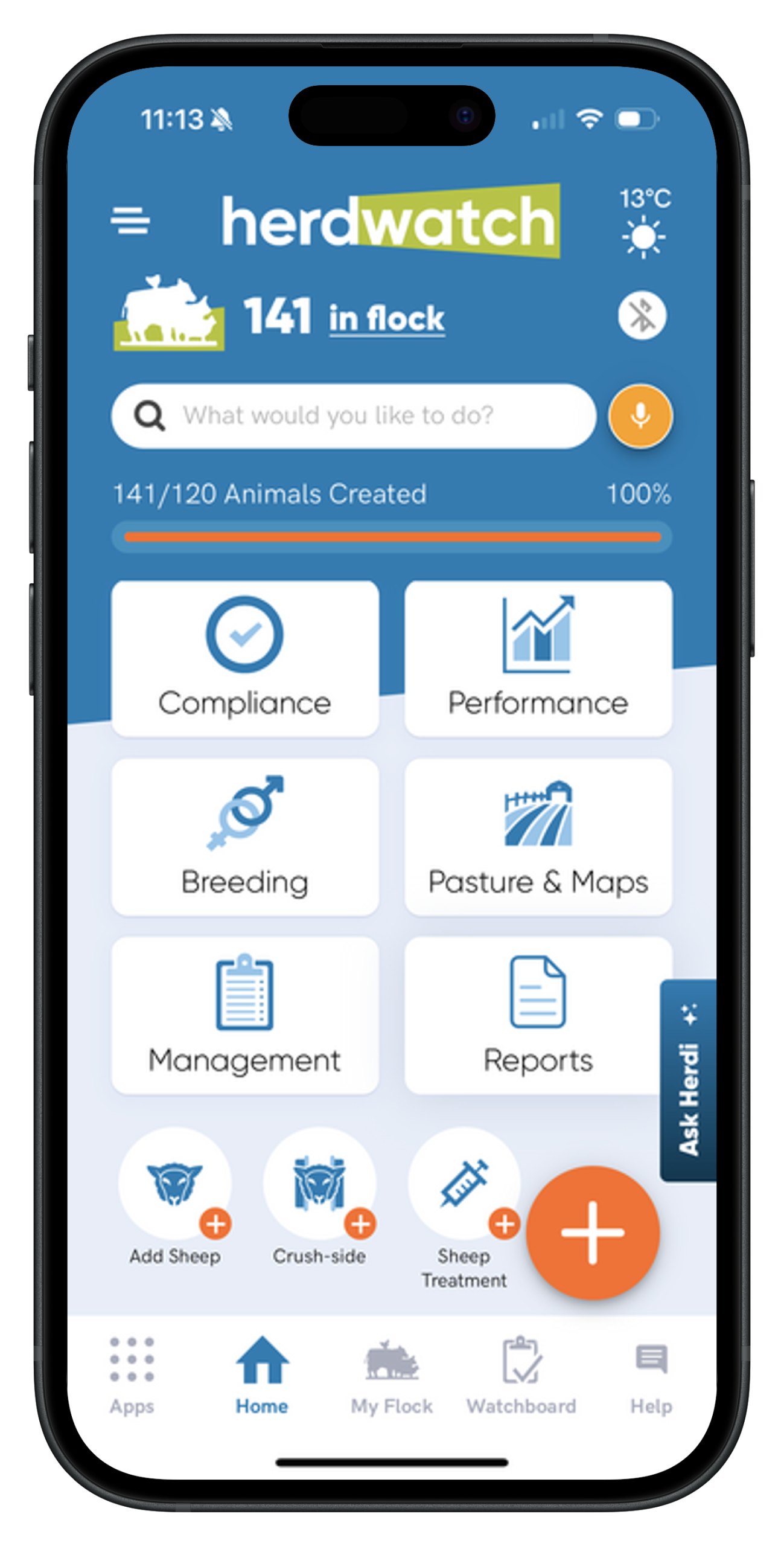
Whether you’re using insect growth regulators or treating a case of fly strike, Herdwatch helps you stay compliant and keep your flock healthy.
Blowfly strikes can escalate fast. Early prevention, careful monitoring, and quick response are key to maintaining sheep welfare and reducing losses.
Protect your flock and simplify compliance with Herdwatch.